
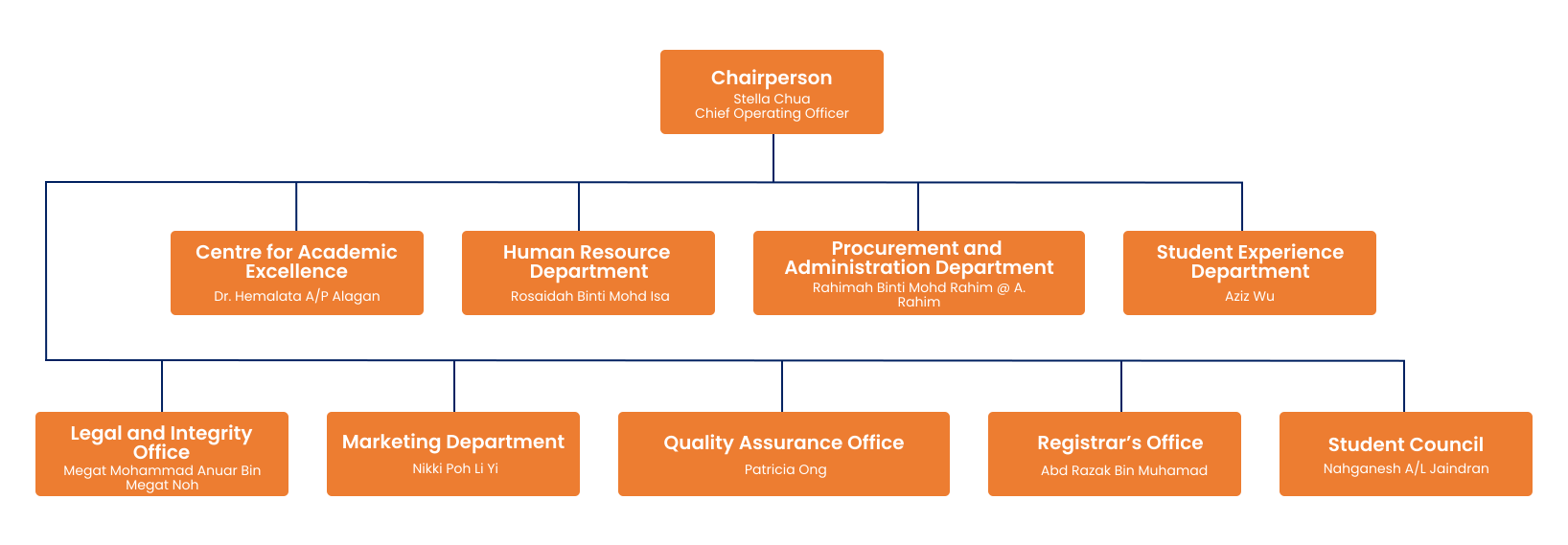
| Governance Body | Institutional Ethics Committee |
|---|---|
| Chairperson | Chief Operating Officer |
| Other Members | Representative from respective Faculty/Departments/Centres: Centre for Academic Excellence Human Resource Department Procurement Department Student Experience Department Legal and Integrity Office Marketing Department Quality Assurance Office Registrar’s Office President, Student Council |
| Secretary | COO Office |
| Frequency of Meeting | Once every semester |
| Quorum of Meeting | Nil |
| Core Functions, Roles and Responsibilities | 1) Receive and assess ethical complaints or referrals. 2) Conduct preliminary reviews and, where necessary, initiate formal inquiries. 3) Ensure confidentiality and fairness in all proceedings. 4) Provide recommendations to senior management. 5) Develop and review institutional ethics policies and guidelines. 6) Organise ethics awareness and training programmes. |
| Reporting Lines | Senior Management Meeting |
| Main Terms of Reference | * MOHE & MQA Regulation * UNITAR Academic Regulation UG/PG *UNITAR Policies and Procedures |
2025
December
| Governance Body | Institutional Ethics Committee |
|---|---|
| Chairperson | Chief Operating Officer |
| Other Members | Representative from respective Faculty/Departments/Centres: Centre for Academic Excellence Human Resource Department Procurement Department Student Experience Department Legal and Integrity Office Marketing Department Quality Assurance Office Registrar’s Office President, Student Council |
| Secretary | COO Office |
| Frequency of Meeting | Once every semester |
| Quorum of Meeting | Nil |
| Core Functions, Roles and Responsibilities | 1) Receive and assess ethical complaints or referrals. 2) Conduct preliminary reviews and, where necessary, initiate formal inquiries. 3) Ensure confidentiality and fairness in all proceedings. 4) Provide recommendations to senior management. 5) Develop and review institutional ethics policies and guidelines. 6) Organise ethics awareness and training programmes. |
| Reporting Lines | Senior Management Meeting |
| Main Terms of Reference | * MOHE & MQA Regulation * UNITAR Academic Regulation UG/PG *UNITAR Policies and Procedures |
2025
December
| Governance Body | Institutional Ethics Committee |
|---|---|
| Chairperson | Chief Operating Officer |
| Other Members | Representative from respective Faculty/Departments/Centres: Centre for Academic Excellence Human Resource Department Procurement Department Student Experience Department Legal and Integrity Office Marketing Department Quality Assurance Office Registrar’s Office President, Student Council |
| Secretary | COO Office |
| Frequency of Meeting | Once every semester |
| Quorum of Meeting | Nil |
| Core Functions, Roles and Responsibilities | 1) Receive and assess ethical complaints or referrals. 2) Conduct preliminary reviews and, where necessary, initiate formal inquiries. 3) Ensure confidentiality and fairness in all proceedings. 4) Provide recommendations to senior management. 5) Develop and review institutional ethics policies and guidelines. 6) Organise ethics awareness and training programmes. |
| Reporting Lines | Senior Management Meeting |
| Main Terms of Reference | * MOHE & MQA Regulation * UNITAR Academic Regulation UG/PG *UNITAR Policies and Procedures |