Table of Contents
Discussions at UNITAR’s Industry Advisory Board (IAB) 2026 highlighted forward-looking ways the industry and UNITAR can work together to develop better talent for the marketplace.
Bringing together industry representatives, professional bodies, academics and alumni, the engagement examined how education can respond to changing workplace expectations and support employability throughout a person’s career.
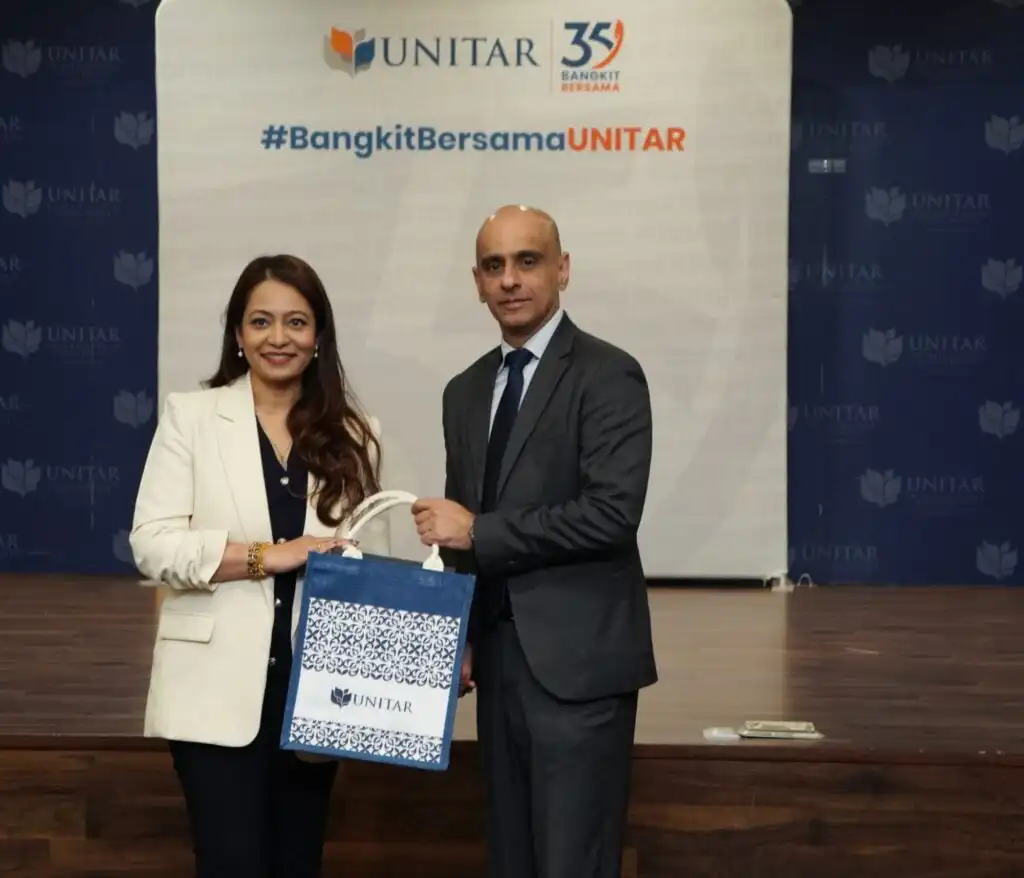
Delivering the keynote address, Biruntha Mooruthi, Group Chief Executive Officer of TalentCorp, emphasised the need for universities and employers to translate workforce insights into practical learning opportunities for graduates and experienced professionals.
“Malaysia needs talent with technical, digital and AI capabilities, supported by critical thinking, communication and sound judgement. Through the Talent Readiness Index (MyTRI), TalentCorp aims to provide a clearer picture of talent readiness and gaps to inform development efforts. Universities and employers must work together to translate these insights into relevant curricula, practical projects, quality structured internships and continuous learning, helping both graduates and experienced professionals build the capabilities to progress in their careers,” she said.
Biruntha said addressing Malaysia’s skills gap requires coordinated efforts to support learning and career progression as workforce needs change.
“Industry-aligned learning must continue throughout a person’s career. Government, agencies, industry and education institutions must work together to help Malaysians build relevant skills and progress as job requirements evolve.
“Through MyBakat, TalentCorp connects workforce insights with practical talent development. Our Future Skills Talent Council, or FSTC, brings together industry, government, academia and training providers to identify skills needs and guide relevant interventions. These insights inform industry-driven training through the MyBakat Talent Incubation Programme, or MyBIG, while complementary services such as PERKESO’s MYFutureJobs support job matching and career guidance. Together, these efforts create clearer pathways from skills development to quality jobs and better livelihoods,” she added.
Professor Emeritus Tan Sri Dato’ Sri Ir. Dr. Sahol Hamid bin Abu Bakar, Chief Academic Officer of UNITAR Education Group, said closer collaboration between universities and employers is essential to translating changing workforce needs into relevant learning opportunities.
“Malaysia’s talent needs extend beyond preparing students for their first job. We must also help people build the capabilities to progress, move into new roles and respond to changes in their industries. This includes experienced professionals returning to education to deepen their expertise or acquire new skills.
“Closer engagement with employers helps us understand where those needs are emerging. The aim is to help people apply what they learn, contribute meaningfully at work and sustain their career prospects,” he said.
Industry participants reinforced the need to develop judgement and practical problem-solving alongside digital capabilities.
“Problem-solving and critical thinking are essential, alongside AI and digital skills. Students need to know how to assess a situation, think through the options and apply their knowledge to solve problems,” said Dr Shamsul Nizam Kachi Mohideen, Lecturer from Institut Pendidikan Guru, Kampus Pendidikan Teknik, Kompleks Pendidikan Nilai.
The importance of adaptability also emerged in discussions on teacher preparation, particularly in applying academic knowledge across different school environments and student needs.
“I have been teaching for 18 years, and I believe adaptability is one of the most important qualities of a good teacher. Teachers need to adapt to changes in the curriculum, the schools and communities where they are posted, and the realities of applying what they have learnt in the classroom,” said Sirajun Munira Sahrudee, Head of English Language Panel, Sekolah Rendah Puncak Alam.
For occupational safety and health professionals, building relationships and earning trust were identified as essential to putting technical expertise into practice.
“Networking matters, including beyond your own industry. As an occupational safety and health professional, you need to build relationships with people at different levels,
including senior management. Their trust helps you advise effectively and influence decisions on health and safety,” said Azwadi Mokhtar, Executive Director, Malaysian Society of Occupational Safety and Health (MSOSH). The representative also encouraged students to approach internships with professional commitment.
“Students should treat an internship as an actual job. It is an opportunity to understand workplace expectations, take responsibility and show employers what they can contribute,” he added.
The discussions highlighted the importance of connecting academic learning with workplace experience through industry-informed curricula, meaningful placements and opportunities to address real business challenges. For working adults, flexible learning pathways and micro-credentials can support the development of new capabilities alongside existing responsibilities.
“Today, senior leaders and industry changemakers had an insightful discussion about what needs to change and how we can move forward together. Their insights give us a clear direction for aligning our curricula with industry needs and preparing learners for the expectations of the workplace. Our commitment is to put these insights into practice, with the urgency and rigour that industry expects,” said Dr Jagdeep Singh Jassel, Executive Director, Continuing Professional Education, UNITAR Education Group; Vice Chancellor, UNITAR University College Kuala Lumpur (UUCKL).
As UNITAR marks its 35th anniversary, the engagement is part of its ongoing collaboration with industry to strengthen programme relevance and support learners at different stages of their careers.
ABOUT UNITAR EDUCATION GROUP
UNITAR Education Group marks its 35th anniversary in 2026, celebrating a legacy of widening access to quality education, empowering diverse learners, and producing industry-ready, future-focused graduates across Malaysia and beyond.
Aligned with the United Nations Sustainable Development Goals, UNITAR continues to deliver accessible, relevant, holistic education—equipping learners from all backgrounds with the skills, mindset, and opportunities to thrive in a rapidly evolving global landscape.
Media Contact
Josephine Dionisappu,
Head of Corporate Communications
UNITAR Education Group,
ym.ratinuobfsctd-2e851d@uppasinoid.enihpesoJ
+60 12 376 0029.